

What Are the 4 C's of Volunteering? A Guide to Commitment, Competence, Compassion, and Communication
Volunteer Readiness Self-Assessment
Answer these questions honestly to see how well you align with the core pillars of effective volunteering.
Your Volunteer Readiness Score
You’ve signed up for a shift. You’re eager to help. But three weeks later, you’re ghosting your coordinator because the role didn’t match your skills, or you felt emotionally drained by clients who needed more than just your time. This isn’t rare. In fact, poor volunteer retention often stems from a mismatch in expectations, not a lack of goodwill. The fix lies in understanding the 4 C's of volunteering: Commitment, Competence, Compassion, and Communication. These aren’t just buzzwords on a charity brochure; they are the operational pillars that determine whether your contribution actually helps or inadvertently creates work for staff.
Commitment: Showing Up When It’s Hard
Commitment is the foundation. It is the consistent reliability of a volunteer to fulfill their agreed-upon schedule and responsibilities. Unlike paid employees, volunteers can walk away without financial penalty, which makes consistency a powerful signal of professionalism. Non-profits operate on tight budgets. When a volunteer cancels last minute, it doesn’t just mean an empty slot; it means a client goes unserved or a program gets cut short.
Think about local food banks in Auckland. If you commit to packing boxes every Tuesday morning but miss four out of ten Tuesdays, the logistics team has to scramble to find replacements. This disrupts the flow for everyone. True commitment isn’t about working 40 hours a week; it’s about honoring the small promises you make. Did you say you’d stay until 1 PM? Then stay until 1 PM. Did you agree to a six-month term? Try to see it through, even if the initial excitement fades.
- Reliability: Arrive on time, every time. Punctuality shows respect for the organization’s resources.
- Longevity: Short-term bursts are less valuable than steady, long-term presence. Training costs money and time; organizations prefer volunteers who stick around.
- Proactive Notification: If you must cancel, do it early. Last-minute cancellations are harder to manage than those made 24 hours in advance.
Competence: Matching Skills to Needs
Good intentions don’t build houses. Competence refers to the alignment between a volunteer’s actual skills and the specific requirements of the role. Many people assume any warm body is helpful. That’s false. Placing a person with no medical training in a hospital ward can be dangerous. Placing a tech-savvy accountant in a manual labor role might result in boredom and quick burnout.
Before you sign up, audit your own toolkit. Are you good with data entry? Great, many charities are drowning in paperwork. Are you great at talking to kids? Look for mentoring roles. Are you handy with tools? Habitat for Humanity needs you, not necessarily the reception desk. Competence also involves humility. If you are placed in a role outside your expertise, ask questions. Don’t fake it. Asking "How do I do this correctly?" is far better than doing it wrong and having to redo it later.
| Skill Set | Ideal Role Type | Common Pitfall |
|---|---|---|
| Administrative / Organized | Data Entry, Event Planning, Grant Writing | Overcomplicating simple filing systems |
| Empathetic / Listener | Phone Support, Elderly Visits, Crisis Lines | Taking on emotional burden without boundaries |
| Physical / Handy | Construction, Garden Maintenance, Moving Items | Ignoring safety protocols due to overconfidence |
| Creative / Digital | Social Media, Graphic Design, Photography | Creating content that doesn't align with brand voice |
Compassion: The Emotional Engine
If competence is the brain, Compassion is the heart. It is defined as the genuine desire to alleviate suffering or improve well-being for others, coupled with the ability to empathize without judgment. However, compassion in volunteering isn’t just about feeling sad for someone. It’s about actionable empathy. It’s treating a homeless individual with the same dignity you’d offer a CEO. It’s listening to a lonely senior citizen without checking your watch.
There’s a trap here called "compassion fatigue." If you dive into high-intensity roles like hospice care or refugee support without proper self-care, you can burn out quickly. Sustainable compassion requires boundaries. You care deeply, but you recognize you cannot save everyone. You are there to support, not to rescue. This distinction protects both you and the person you’re helping. It keeps the dynamic healthy and professional rather than codependent.
Communication: Bridging the Gap
The final pillar, Communication, is the clear exchange of information between volunteers, staff, and beneficiaries to ensure smooth operations and positive outcomes. Most volunteer conflicts arise from silence. A volunteer assumes they know what to do. A coordinator assumes the volunteer knows the rules. Neither speaks up, and mistakes happen.
Effective communication starts before you begin. Read the handbook. Ask clarifying questions during orientation. Once you’re in the field, report issues immediately. Did a piece of equipment break? Tell someone. Did a client seem distressed? Let the supervisor know. Don’t hide problems hoping they’ll go away. They rarely do.
It also works the other way. Provide feedback. If a process seems inefficient, suggest a change politely. If you feel unsupported, speak to your manager. Organizations value volunteers who communicate openly because it helps them improve their programs. Silence breeds resentment; dialogue builds trust.
Putting It All Together: A Real-World Scenario
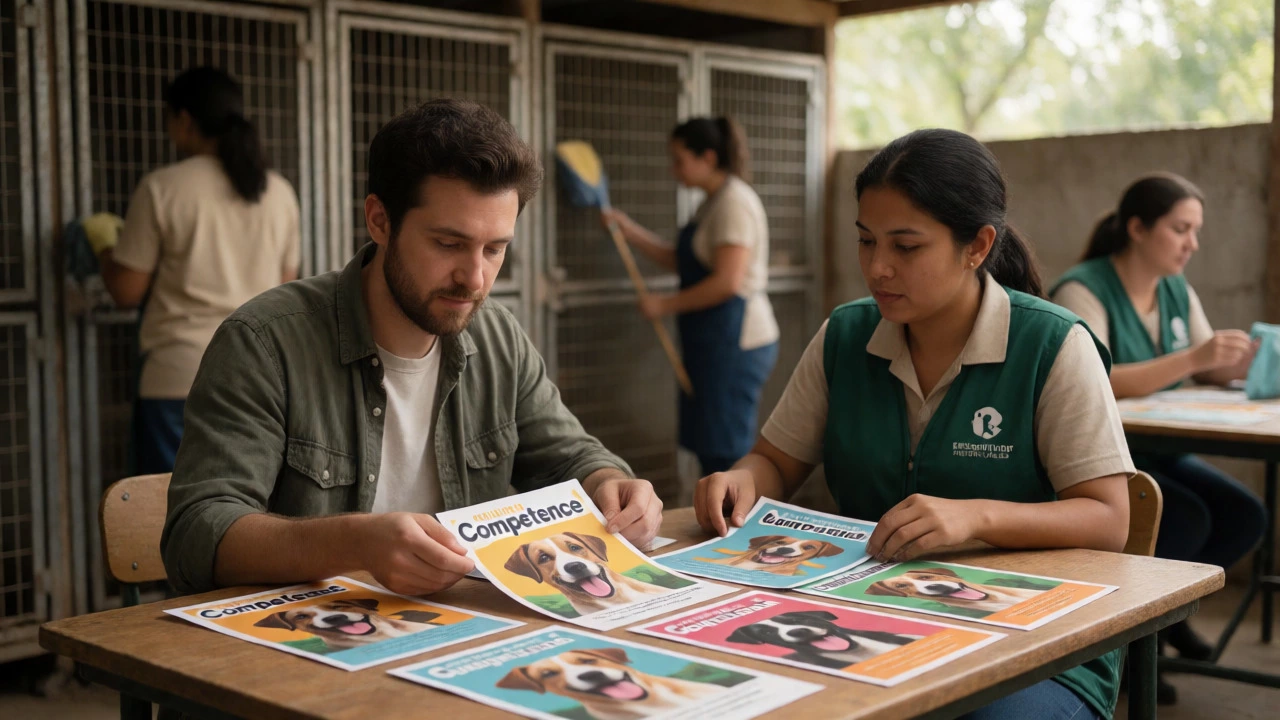
Imagine Sarah, a graphic designer in Auckland. She wants to volunteer for a local animal shelter. Here’s how she applies the 4 C's:
- Commitment: She agrees to create social media posts once a week for six months. She sticks to this deadline, even when her paid job gets busy.
- Competence: She doesn’t try to clean kennels if she hates dog hair. Instead, she uses her design skills to make flyers for adoption days, where she excels.
- Compassion: When posting photos of neglected dogs, she avoids pity-baiting images that shame owners. She chooses shots that highlight hope and resilience, respecting the animals' dignity.
- Communication: She asks the shelter manager exactly what tone of voice they want for Instagram. She sends drafts two days early for approval, avoiding last-minute panic.
See how each element supports the others? Without competence, her designs might be ugly. Without compassion, they might be offensive. Without communication, they might be rejected. Without commitment, the project stalls.

Common Mistakes to Avoid
Even experienced volunteers slip up. Watch out for these common errors:
- The "Hero Complex": Thinking you’re saving the world single-handedly. Remember, you’re part of a team. Humility goes a long way.
- Scope Creep: Taking on too many tasks because you said yes to everything. Learn to say no gracefully to maintain quality.
- Assuming Knowledge: Never guess. If instructions are unclear, ask. It saves time and prevents errors.
- Neglecting Self-Care: Volunteering should energize you, not drain you completely. Monitor your energy levels and adjust your hours if needed.
Why This Matters for Your Career Too
Don’t view volunteering solely as charity. It’s career development. Demonstrating the 4 C's looks fantastic on a resume. Employers love candidates who show commitment (reliability), competence (skill application), compassion (cultural fit/empathy), and communication (teamwork). Whether you’re a student looking for internships or a professional seeking a pivot, these traits are universal currency in the job market.
Can I volunteer if I have no specific skills?
Absolutely. Every organization needs general helpers for sorting donations, greeting guests, or setting up events. While specialized skills are valuable, reliability and a positive attitude (part of Commitment and Communication) are often more critical for entry-level roles. Start small, prove your worth, and you may discover hidden talents along the way.
How much time should I commit to initially?
Start modestly. One or two hours a week is manageable for most people. It’s better to consistently show up for one hour than to promise five hours and then quit after a month. Organizations appreciate consistency over volume. You can always increase your hours later once you understand the workflow and your capacity.
What if my compassion leads to burnout?
Burnout is real, especially in emotional roles. To prevent it, set strict boundaries. Decide beforehand how much emotional energy you can give per shift. Practice active self-care outside of volunteering hours. If you feel overwhelmed, talk to your coordinator. They may move you to a different role that requires less emotional labor, allowing you to continue contributing sustainably.
Is competence required for all volunteer roles?
Not necessarily technical competence, but functional competence is key. For example, you don’t need a degree to sort cans at a food bank, but you do need the competence to follow labeling instructions accurately. Understanding the task and performing it reliably is a form of competence. If you lack a skill, be willing to learn it quickly.
How do I handle difficult communication situations?
Stay calm and factual. If a beneficiary is angry, listen without taking it personally. Acknowledge their feelings ("I see you're upset") and focus on solving the immediate problem. If the situation escalates beyond your control, involve a staff member. Effective communication often means knowing when to step back and let professionals handle complex interpersonal dynamics.