

The 5 C's of Engagement: A Practical Guide for Community Outreach
5 C's of Engagement Audit Tool
Evaluate your community outreach strategy against the five core pillars: Connection, Communication, Contribution, Consistency, and Celebration.
1. Connection
2. Communication
3. Contribution
4. Consistency
5. Celebration
Audit Results for
Have you ever watched a community project fizzle out despite having great ideas and plenty of initial hype? It’s a frustrating reality for many organizers. You launch a campaign, gather a crowd, and then... silence. The emails stop getting replies. The volunteers drift away. The neighbors stop showing up to meetings. Why does this happen so often?
The answer usually isn’t a lack of passion. It’s a lack of structure in how we connect with people. In the world of community outreach, which is the strategic effort by organizations to build relationships and trust with local populations, success depends on more than just good intentions. It requires a framework that keeps people hooked from day one.
This is where the 5 C's of engagement, a model that defines five core pillars necessary for sustaining active participation in social initiatives, comes into play. These aren't just buzzwords; they are the mechanical parts of the engine that drives human connection. When you understand Connection, Communication, Contribution, Consistency, and Celebration, you stop guessing why people leave and start knowing exactly how to keep them involved.
1. Connection: Building the Human Bridge
Everything starts here. Before anyone will care about your cause, they need to feel connected to the people running it. Connection is the emotional glue. It’s the difference between a transactional relationship ("I give money, you do work") and a relational one ("We are in this together").
In practical terms, connection means removing barriers. If your organization feels like a fortress with high walls, people won’t enter. Think about the first time you met a new neighbor. Did they invite you over for coffee, or did they hand you a formal contract? Probably the former. That’s connection.
To build genuine connection:
- Meet people where they are: Don’t expect your audience to come to your office. Go to the local market, the school gate, or the community center.
- Show vulnerability: Share the struggles behind the mission. People connect with stories, not statistics. Tell them why this matters to *you*, not just why it matters to the world.
- Listen more than you speak: In the early stages, your job is to learn their needs, not pitch your solutions.
Without this foundation, everything else crumbles. You can have the best communication strategy in the world, but if people don’t feel a personal link to your team, they will tune out.
2. Communication: Clarity Over Volume
Once a connection is established, you need to maintain it through clear, consistent communication. Many organizations make the mistake of thinking "more is better." They blast out five newsletters a week. But noise is not engagement. Clarity is.
Effective communication answers three questions for your audience: What do you want me to know? What do you want me to feel? What do you want me to do?
If your message is muddy, people will disengage. For example, instead of saying "Join us to help improve community well-being," try "Help us plant 50 trees in Central Park this Saturday morning." Specificity breeds action.
Also, consider the channel. Are you trying to reach retirees via TikTok? Or Gen Z via printed flyers? Match your medium to your audience. Use simple language. Avoid jargon. If you use words like "synergy" or "paradigm shift," you’re building a wall, not a bridge. Keep it human. Keep it direct.
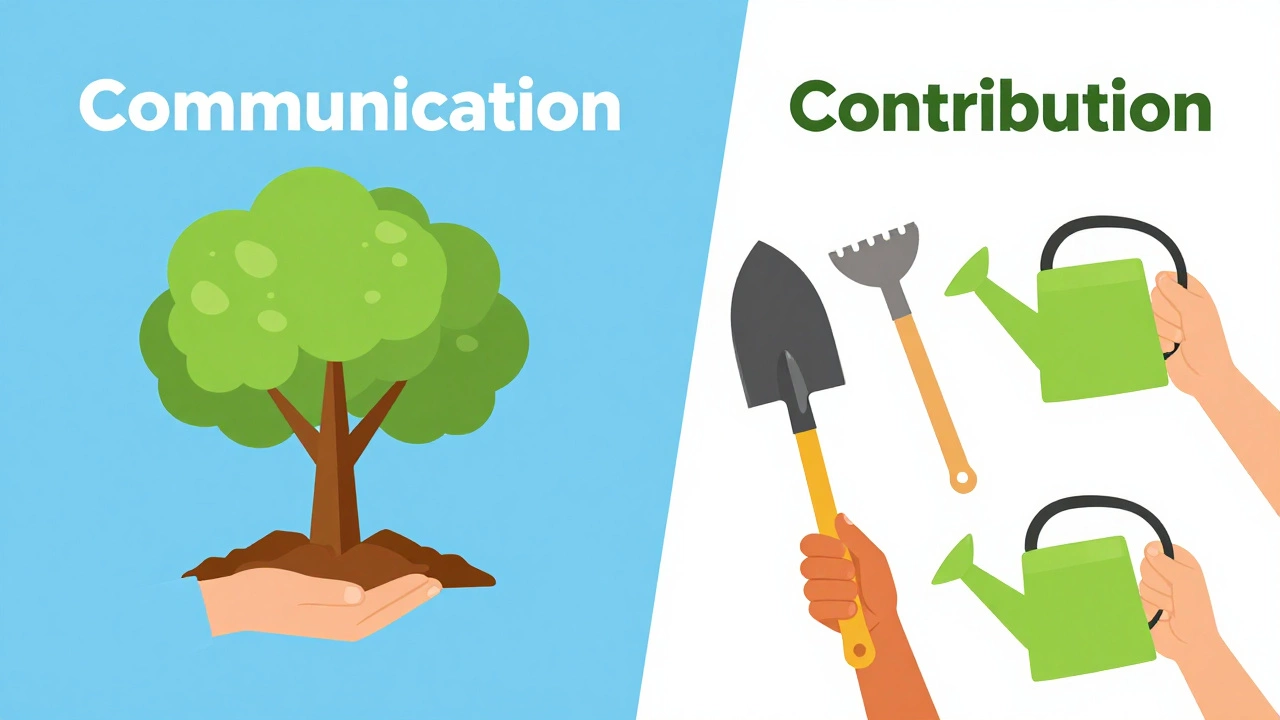
3. Contribution: Giving People a Role
People love to help, but they hate feeling useless. This is where Contribution comes in. It’s about giving individuals a tangible way to add value. Everyone wants to feel like they matter. When you provide a clear role, you satisfy that psychological need.
Contribution doesn’t always mean volunteering hours. It can be:
- Skill-based: Asking a graphic designer to fix your logo.
- Financial: Providing a transparent donation option.
- Advocacy: Encouraging someone to share your post on social media.
- Physical: Inviting someone to sort food at a bank.
The key is to lower the barrier to entry. Make the first step small. Ask for a micro-commitment. Once someone contributes even a little bit, they are psychologically invested. This is known as the "foot-in-the-door" technique. They’ve put skin in the game. Now, they’re less likely to walk away because they’ve already started.
4. Consistency: The Trust Builder
You might get people excited once. But keeping them engaged requires consistency. Inconsistency kills trust. If you promise an update every month and then go silent for six weeks, people assume something is wrong-or worse, that you don’t care.
Consistency applies to your actions, your messaging, and your presence. It means showing up even when it’s hard. It means delivering on your promises, no matter how small.
Think of it like brushing your teeth. You don’t brush for ten minutes once a year. You brush for two minutes every day. Engagement works the same way. Small, regular touches beat grand, rare gestures every time.
Create a rhythm. Maybe it’s a weekly email, a monthly meetup, or a quarterly report. Stick to it. When people know what to expect, they feel safe. And safety leads to loyalty.
5. Celebration: Acknowledging the Win
Finally, you must celebrate. Too many organizations focus solely on the problems they are solving. They talk about poverty, pollution, or isolation. While these issues are real, constantly dwelling on them burns people out. You need to highlight the wins.
Celebration validates the effort. It tells your volunteers, donors, and partners, "What you did mattered." It creates positive reinforcement. When people see the impact of their contribution, they want to do more.
Celebrations don’t need to be expensive parties. They can be:
- A shout-out in your newsletter.
- A handwritten thank-you note.
- A photo of the finished project shared on social media.
- A simple "Great job today!" after a cleanup event.
Make sure the celebration is specific. Don’t just say "Thanks everyone." Say, "Thanks to Sarah for organizing the transport, which allowed 20 extra kids to attend the workshop." Specific praise feels real. Generic praise feels fake.

Putting the 5 C's Into Practice
Let’s look at how these five elements work together in a real-world scenario. Imagine you’re organizing a neighborhood garden project.
- Connection: You knock on doors, introduce yourself, and ask residents what they’d like to grow. You listen to their stories about the land.
- Communication: You send a clear flyer with the date, time, and what to bring. You follow up with a reminder text the day before.
- Contribution: You assign roles. Some people dig, some plant, some water. Everyone has a job.
- Consistency: You hold a weekly watering schedule and stick to it. You post updates every Friday regardless of weather.
- Celebration: When the first tomatoes ripen, you host a small tasting party. You thank the group publicly for their hard work.
See how each C supports the next? Without connection, no one shows up. Without communication, they show up confused. Without contribution, they feel bored. Without consistency, they lose interest. Without celebration, they burn out.
| C Pillar | Core Purpose | Common Pitfall | Actionable Tip |
|---|---|---|---|
| Connection | Build emotional trust | Being too formal or distant | Share personal stories behind the mission |
| Communication | Provide clarity and direction | Overloading with information | Use specific calls-to-action |
| Contribution | Enable active participation | Making tasks too complex | Offer micro-volunteering options |
| Consistency | Maintain reliability | Inconsistent scheduling | Set a predictable rhythm for updates |
| Celebration | Reinforce positive behavior | Focusing only on problems | Highlight specific individual impacts |
Why This Matters for Long-Term Success
In the short term, you might get away with skipping a few C's. You can run a successful one-off event with just Communication and Contribution. But if you want to build a movement, you need all five. Sustainability in community work isn’t about working harder; it’s about working smarter. It’s about creating a system where people want to stay involved because they feel seen, heard, valued, and celebrated.
As you plan your next outreach initiative, audit your current approach. Where are you strong? Where are you weak? Are you communicating clearly but failing to celebrate wins? Are you connecting well but lacking consistency? Identify the gap and fill it. The 5 C's are not a checklist to complete and forget. They are a cycle to nurture continuously.
What are the 5 C's of engagement in simple terms?
The 5 C's are Connection, Communication, Contribution, Consistency, and Celebration. They represent a framework for keeping people actively involved in a cause by building trust, providing clear information, giving them meaningful roles, staying reliable, and acknowledging their efforts.
How do I apply the 5 C's to online communities?
Online, Connection means personalized welcomes. Communication involves clear, frequent posts without spamming. Contribution could be asking users to comment or create content. Consistency is posting on a regular schedule. Celebration is highlighting user-generated content or thanking top contributors publicly.
Is the 5 C's model only for nonprofits?
No. While widely used in community outreach and nonprofits, these principles apply to any group requiring sustained participation, including corporate teams, schools, HOAs, and political campaigns. Anywhere humans collaborate, the 5 C's help maintain momentum.
Which of the 5 C's is most important?
They are interdependent, but Connection is often considered the foundation. Without an initial emotional bond or trust, people may not engage enough to benefit from the other four pillars. However, neglecting Consistency or Celebration will eventually break that connection.
How can I measure if my engagement strategy is working?
Look at retention rates rather than just acquisition. Are people coming back? Are they moving from passive observers to active contributors? Track metrics like repeat attendance, volunteer hours logged, and qualitative feedback from surveys to see if people feel valued and informed.