
Why Do People Join Social Clubs? The Real Reasons Behind Membership
Social Club Matchmaker
Feeling isolated or looking for a new community? This tool helps you identify which type of social group aligns best with your psychological needs and lifestyle, based on insights from recent sociological research.
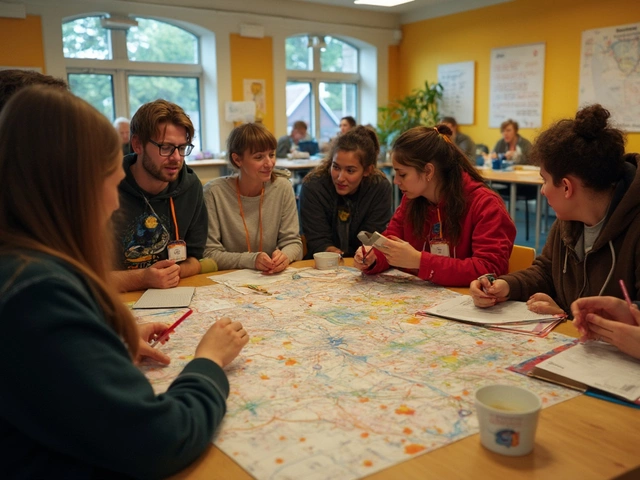
You walk into a room full of strangers. Your palms are sweaty. You’re wondering if you should turn around and go home. But then someone smiles at you, hands you a cup of tea, and asks about your dog. Suddenly, the tension melts. This is the quiet magic of social clubs. They aren’t just places to play bridge or argue about politics over beer; they are lifelines for people craving genuine human contact in an increasingly digital world.
We often assume people join these groups because they have too much free time. That’s rarely the truth. Most members are busy professionals, parents, retirees, or students who feel a specific gap in their lives. Maybe it’s loneliness after moving to a new city like Auckland. Maybe it’s the need to find people who actually care about vintage motorcycles or birdwatching as much as you do. Understanding why we flock to these spaces reveals a lot about our basic psychological needs.
The Craving for Belonging and Identity
Human beings are wired for connection. We don’t just want to be near others; we want to belong to something larger than ourselves. Psychologists call this the "need to belong," and it’s one of our most fundamental drives. When you join a club, you instantly gain a label. You become a member of the Rotary Club, a Rotarian. You become part of the local Chess Society. This identity provides a sense of stability and purpose that casual acquaintances simply can’t offer.
Think about the difference between having ten Facebook friends and being part of a weekly hiking group. On social media, interactions are often performative. In a physical club, you show up rain or shine. You share the struggle of a steep hill climb or the joy of reaching the summit together. These shared experiences build deep bonds. According to research from the University of Queensland, regular social group participation significantly improves mental health outcomes by providing a consistent source of support and validation.
This isn’t just about feeling good; it’s about survival. Historically, humans who were excluded from their tribe faced death. Today, exclusion feels like depression. Clubs mitigate this fear by offering a structured environment where acceptance is guaranteed if you follow the basic rules of membership. You don’t have to reinvent yourself every week. You just have to show up as you are.
Fighting the Loneliness Epidemic
Let’s address the elephant in the room: loneliness is real, and it’s dangerous. The U.S. Surgeon General recently declared loneliness an epidemic, comparing its health risks to smoking fifteen cigarettes a day. It increases the risk of heart disease, stroke, and dementia. For many adults, especially those over fifty, making new friends becomes exponentially harder once work stops being a primary social hub.
Social clubs act as antidotes to this isolation. They provide what sociologists call "weak ties"-connections with acquaintances that might not seem deep but are crucial for well-being. A study published in the American Journal of Public Health found that individuals with diverse social networks had lower rates of mortality than those with only close family ties. Why? Because weak ties expose us to new ideas, resources, and perspectives. They keep our brains active and our worldviews flexible.
Consider the retiree who joins a gardening club. He isn’t just learning how to prune roses. He’s engaging in conversation, planning events, and feeling useful. He has a reason to get out of bed. This structure combats the drift into isolation that often accompanies retirement. The club becomes a third place-not home, not work, but a community anchor.
Shared Interests as Social Glue
One of the biggest barriers to making friends as an adult is the awkwardness of small talk. What do you say to a stranger at a party? With a social club, the topic is pre-selected. If you join a photography club, you talk about lenses. If you join a book club, you discuss plot twists. The shared interest removes the pressure to entertain. You already have something in common, which lowers the barrier to entry for meaningful conversation.
This phenomenon is known as "activity-based friendship." Research suggests that friendships formed through shared activities are more resilient than those formed through proximity alone. When you bond over doing something, rather than just sitting and talking, the relationship feels less forced. It grows organically. Plus, when life gets tough, you have a built-in excuse to reach out. "Hey, did you see that new exhibit?" is easier to send than "I’m lonely, hang out with me."
Here is a breakdown of why different types of clubs appeal to different psychological needs:
| Club Type | Primary Psychological Driver | Social Benefit |
|---|---|---|
| Hobby Clubs (e.g., Knitting, Coding) | Mastery and Flow State | Low-pressure interaction; skill-based respect |
| Service Clubs (e.g., Lions, Kiwanis) | Purpose and Altruism | Shared moral values; status within community |
| Sports Leagues | Physical Well-being and Teamwork | Camaraderie through shared effort; accountability |
| Professional Networks | Ambition and Opportunity | Access to information; career advancement |

Combating Social Anxiety Through Structure
Paradoxically, many people who suffer from social anxiety join clubs specifically to manage that anxiety. How does that work? By providing clear scripts and roles. In a formal dinner club, you know exactly when to speak and when to listen. In a board game night, the rules dictate the interaction. This structure reduces the cognitive load of navigating ambiguous social situations.
For introverts, large open-ended parties are exhausting. There’s no exit strategy, no defined end time, and no clear topic. A club meeting usually has a start time, an agenda, and an end time. You know exactly what you’re signing up for. This predictability allows anxious individuals to engage without the fear of being trapped in a draining conversation. Over time, repeated exposure in a safe, structured environment builds confidence. Many members report that their club was the training ground where they learned to speak up in meetings or approach strangers in other contexts.
Networking Beyond the Business Card
While we often dismiss networking as transactional, social clubs offer a softer, more authentic version. Traditional business networking can feel predatory-everyone is selling something. In a social club, relationships develop slowly over months or years. You see each other in vulnerable moments, laughing at bad jokes, or helping set up chairs. This creates trust.
When you eventually need professional help-a plumber, a lawyer, a job lead-you turn to your club contacts first. Not because they are the cheapest, but because you know them. You’ve vetted their character through hundreds of hours of casual interaction. This "trust capital" is far more valuable than a LinkedIn connection. It turns a cold contact into a warm referral almost instantly.

The Role of Ritual and Routine
Life is chaotic. Work deadlines shift, families change, and cities transform. Social clubs provide rituals. The Tuesday night poker game, the monthly potluck, the annual charity run. These recurring events create a rhythm to life. They give us anchors. Knowing that next Thursday, you’ll be sitting with the same five people discussing the same ongoing saga of the league table provides comfort.
Rituals also facilitate memory sharing. As we age, our social circles shrink. Friends move away or pass on. A long-standing club preserves collective memory. You remember who started the tradition of bringing homemade pies. You remember the great debate of 2019. This continuity helps combat the existential dread of aging. You are part of a story that predates you and will continue after you leave.
How to Find Your Tribe
If you’re reading this and thinking, "I need this," here’s how to start without overwhelming yourself. Don’t try to join three clubs at once. Pick one interest you genuinely enjoy, even if you’re not an expert. Authenticity attracts authenticity. If you fake enthusiasm for stamp collecting, you’ll burn out in two weeks.
- Start Local: Check community centers, libraries, or online platforms like Meetup for groups in your area.
- Test Drive: Most clubs allow guests to attend one or two meetings before paying dues. Use this to gauge the vibe.
- Observe the Culture: Is the group welcoming? Do they include newcomers in conversations? Or do they stick to cliques?
- Commit Small: Agree to attend three times. Often, the discomfort fades after the second visit.
Remember, the goal isn’t to become president of the club. It’s to find a handful of people who make your week slightly brighter. That’s enough.
Are social clubs only for extroverts?
No, many clubs are ideal for introverts. Structured activities reduce the pressure of unstructured socializing. Introverts often prefer smaller groups with deeper connections, which many hobby-focused clubs provide. The key is finding a club size and activity level that matches your energy limits.
How much does joining a social club typically cost?
Costs vary widely. Hobby clubs might charge $10-$50 annually for venue fees. Service clubs like Rotary or Lions may have higher dues ($100-$300/year) plus event costs. Sports leagues often cover equipment and field rentals. Always ask about hidden costs like mandatory dinners or uniform fees before joining.
What if I don't fit in with the existing members?
It happens. Give it three visits. Sometimes cliques soften once they recognize you. If the culture still feels hostile or exclusive, leave without guilt. There are dozens of alternative groups. Your time is valuable, and you shouldn't force a square peg into a round hole.
Can social clubs help with career growth?
Yes, indirectly. Professional networking clubs directly target this, but even hobby clubs connect you with people from various industries. These connections are based on personal rapport, which makes them more reliable for referrals and mentorship than purely professional contacts.
Is it hard to maintain friendships made in clubs?
Not necessarily. Since you see each other regularly due to club schedules, maintenance is built-in. However, taking initiative outside club hours strengthens these bonds. Invite someone for coffee or suggest a side activity. The club provides the foundation; your effort builds the house.