How to Get Better Outreach: A Practical Guide for Community Engagement
Community Outreach Messaging Optimizer
Transform self-focused organization messages into community-centric invitations that drive engagement.
You send out flyers. You post on social media. You knock on doors. And yet, the room stays empty, or worse, people look at you like you’re a stranger trying to sell them something. If you are running a nonprofit, a community group, or even a small business trying to connect with locals, this frustration is familiar. The problem isn’t that your cause isn’t good enough. The problem is likely that your outreach strategy feels like shouting into a void rather than starting a conversation.
Getting better at outreach doesn’t mean spending more money on ads. It means shifting from broadcasting to connecting. It requires understanding who actually cares about what you do and meeting them where they already are. Let’s break down how to stop guessing and start engaging.
Stop Talking About Yourself
The biggest mistake in community engagement is making it all about your organization. When you say, “We need volunteers,” you are talking about your needs. When you say, “Help us fix the park so kids have a safe place to play,” you are talking about their values. People join causes because they want to feel part of something bigger, not because they want to fill a slot in your staffing spreadsheet.
To fix this, rewrite your messaging using the “You” perspective. Look at your current flyers or emails. How many times does the word “we” or “our” appear? Cut those numbers in half. Replace them with benefits for the community member. Instead of “Join our team,” try “Make a difference in your neighborhood.” This simple shift changes the dynamic from a transaction to an invitation.
| Old Approach (Self-Focused) | New Approach (Audience-Focused) |
|---|---|
| We need more donations to survive. | Your support keeps free meals available for families. |
| Our event starts at 6 PM. | Meet neighbors and enjoy live music at 6 PM. |
| We are recruiting volunteers. | Get hands-on experience while helping local seniors. |
| Visit our website for details. | See how your time can change lives today. |
Find Where Your Audience Actually Hangs Out
If you are trying to reach young parents but only posting on LinkedIn, you will fail. If you are targeting elderly residents but only sending TikTok videos, you will be ignored. Effective outreach starts with mapping your audience’s daily habits. This isn’t just about demographics; it’s about psychographics-what do they care about, and where do they spend their time?
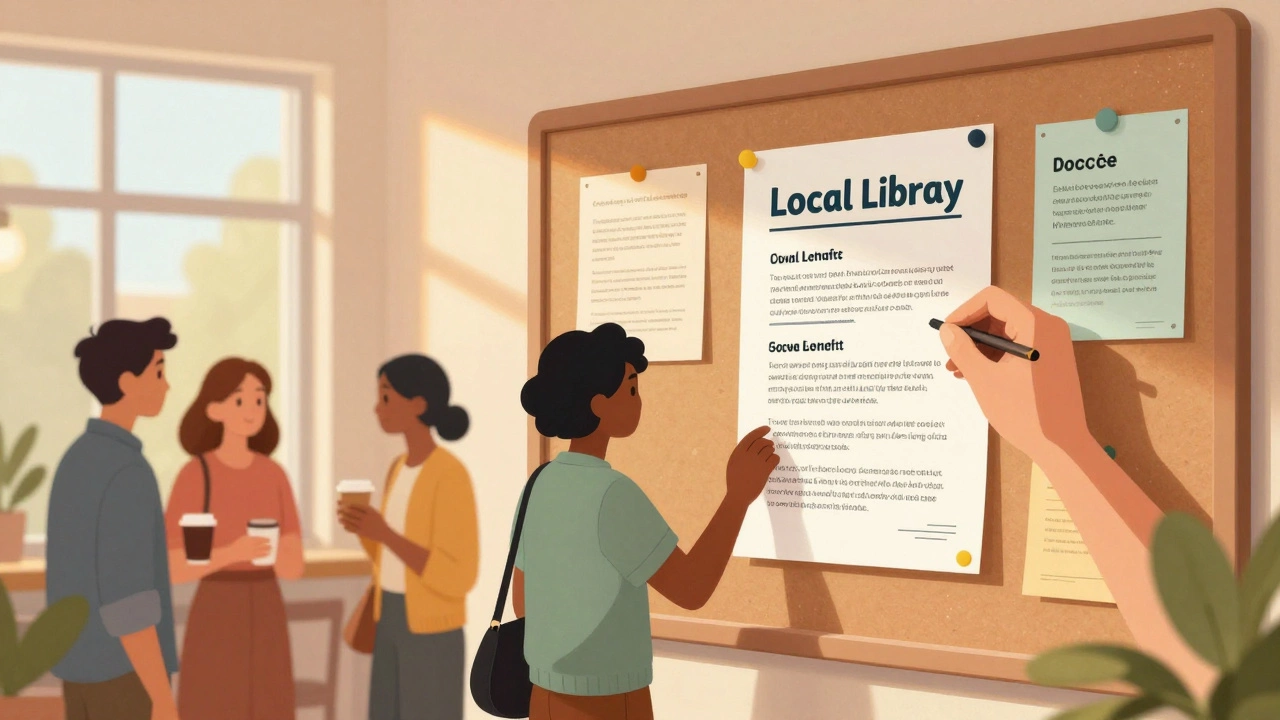
For community groups, physical presence still matters. Partner with existing hubs. Local libraries, coffee shops, and community centers are natural gathering spots. Ask if you can leave a QR code flyer on their bulletin board or host a small pop-up event. Digital presence requires precision. Use Facebook Groups specific to your neighborhood, not just general pages. Engage in comments before you post your own content. Build trust first, then ask for action.
Leverage Micro-Influencers and Trusted Voices
In any community, there are unofficial leaders. These aren’t necessarily celebrities. They are the teacher everyone respects, the shop owner who knows every customer’s name, or the active parent in the school district. These micro-influencers hold immense sway over public opinion because they are trusted peers, not distant authorities.
Identify three to five of these individuals in your target area. Don’t ask them to promote you immediately. Invite them to your events as guests. Ask for their advice on how to improve your programs. When they see you value their input, they become your advocates. A recommendation from a trusted neighbor carries ten times the weight of a generic advertisement. This is the essence of social proof.
Social Proof is the psychological phenomenon where people copy the actions of others in an attempt to undertake behavior in a given situation. In community outreach, this means leveraging testimonials and visible participation to encourage others to join.Create Low-Barrier Entry Points
Asking someone to commit to volunteering every Saturday for a year is a huge ask. Most people will say no, not because they don’t care, but because they are busy and overwhelmed. To get better outreach results, lower the barrier to entry. Create “micro-actions” that take less than fifteen minutes.
Examples of low-barrier entries include:
- Signing a petition online.
- Attending a one-hour informational workshop.
- Donating a single item to a drive.
- Sharing a post on social media.

Follow Up Like a Human, Not a Robot
Many organizations collect email addresses and phone numbers, then blast out monthly newsletters that go straight to the trash folder. Personalization is the antidote to noise. If someone attends your event, send them a personal thank-you note within twenty-four hours. Mention something specific they said or did. This shows you see them as a person, not a data point.
Use tools to segment your list. Separate donors from volunteers, and new contacts from long-time supporters. Tailor your messages accordingly. A donor wants to know impact metrics; a volunteer wants to know schedule updates. Generic mass emails kill engagement. Specific, timely communication builds loyalty.
Measure What Matters
You cannot improve what you do not measure. However, most organizations track the wrong metrics. They count likes and shares, which are vanity metrics. Instead, focus on conversion metrics. How many people moved from awareness to action? How many attendees became regular volunteers? What is the retention rate of your donors?
Set clear goals for each campaign. For example, “Increase newsletter sign-ups by 10% this month through library partnerships.” Track the source of each new contact. Did they come from the flyer at the coffee shop or the Facebook ad? Double down on what works and cut what doesn’t. Data-driven decisions remove the guesswork from outreach.
What is the most effective way to start community outreach?
Start by identifying a specific problem your community faces and listening to local residents about their concerns. Build relationships with trusted local figures before asking for anything. Small, consistent actions like attending neighborhood meetings or partnering with local businesses create a foundation of trust that makes future outreach much easier.
How can I make my outreach messages more engaging?
Focus on the recipient's benefits rather than your organization's needs. Use clear, simple language and avoid jargon. Include a specific call-to-action that is easy to complete. Personalize your messages whenever possible, and use storytelling to illustrate the real-world impact of the issue you are addressing.
Why are people ignoring my flyers and posts?
People ignore content that feels irrelevant or self-serving. If your message focuses on what you need rather than what they gain, it will be overlooked. Additionally, if you are reaching them in the wrong places or too frequently, they may tune you out. Ensure your channels match your audience's habits and your message resonates with their values.
How do I find micro-influencers in my community?
Look for individuals who are consistently active and respected in local spaces. This includes teachers, small business owners, religious leaders, and active parents. Observe who people listen to in community meetings or online forums. Reach out to them genuinely, seeking their advice rather than immediate promotion, to build a authentic relationship.
What metrics should I track to measure outreach success?
Focus on conversion metrics rather than vanity metrics. Track how many people take specific actions, such as signing up, donating, or volunteering. Monitor retention rates to see if people stay engaged over time. Analyze the source of new contacts to understand which channels are most effective for your specific audience.